Problem Description
Problem Statement
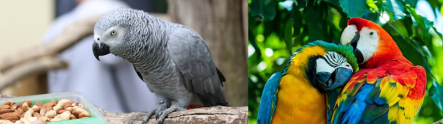
Animal captivity involves keeping wild or domestic animals in enclosed spaces under human control, including in domestic settings as pets. Captivity often affects animals by causing chronic stress, boredom, and loneliness; for example, pets are frequently left alone for long periods, sometimes for days, while their human caretakers travel. Designing for animal usability and experience is uniquely challenging because non-human users cannot provide verbal feedback to communicate their needs or preferences. However, recent progress in AI is promising to help automatically interpret animal behavior and communication. This allows technology to be designed with a primary focus on animal welfare and enrichment, ultimately improving animal autonomy and self-determination.
Background and Motivation
Animal-Computer Interaction (ACI) is a rapidly growing subfield of Interaction Design that shifts the user-centric paradigm from humans to animals. As technology integrates into wildlife conservation, farming, and domestic pet care, there is a critical need for frameworks that prioritize animal welfare, agency, and cognitive capabilities. This project applies core Medieninformatik competencies to a novel domain, challenging standard human-computer interaction (HCI) assumptions. Students must design systems without relying on human language, standard mental models, or typical human anatomy. By integrating Machine Learning and More-than-Human-Design, this project elevates traditional HCI into intelligent systems where computers mediate the interpretation and response to animal behavioral states (or vocalizations). Students work in small groups (2–6 students) to research, design, and evaluate an AI-driven interactive system or component for a specific target species (e.g., domestic dogs, cats, birds, or shelter animals).
Project Definition
Students work in small groups (2–6 students) to research, design, and evaluate an AI-driven interactive system or component for a specific target species (e.g., domestic dogs, cats, birds, or shelter animals).
To accommodate different specializations within the Master's program, groups have full flexibility regarding their project focus and methodology:
- The AI-Heavy Track: Prioritizes data collection, engineering, training, and optimizing novel machine learning models (e.g., custom dataset curation, bioacoustic classification). The final prototype can remain a software-based or simulated interface.
- The Interface-Heavy Track: Prioritizes the design, physical prototyping, and deployment of the interactive system. Students can use lightweight or pre-trained ML models as drivers of interaction modalities.
Research Question (High Level)
- RQ: How can Animal-AI interactions enrich (isolated) animals?
- Sub-RQ: In what ways can these interactions be designed to enhance the animal's autonomy and self-determination?
Note that the RQ must be operationalized through sub-questions tailored to the specific needs of the target animal (e.g., parrot, dog, cat, fish, ape, etc.). For example:
Expected Outcomes: A research paper that must include:
- The Problem: Define a specific question or challenge regarding how AI can enrich (isolated) captive animals.
- The Method: Explain the systematic, step-by-step approach used to design or evaluate the interaction/artifact (e.g., prototyping, observational frameworks, or behavioral metrics).
- The Contribution: Present original findings and concrete conclusions that add valuable knowledge to the broader Animal-Computer Interaction (ACI) scientific community.
Learning Outcome
The learning outcome is a mix of research and methodological competence, specialized technical and design skills, and critical thinking. A specific focus is placed on:
- Non-Human Centered Design: They break out of traditional "user experience" (UX) frameworks to design interfaces and intelligences tailored to the unique sensory, cognitive, and physical needs of a completely different species.
- AI Application Design: They learn how to conceptually structure or practically build AI systems (e.g., standalone vs. human-mediated) specifically for adaptive, real-time environment enrichment rather than standard human productivity.
Participation Requirements
To ensure the academic rigor of the research paper, participating students must have direct access to a target animal subject for observation and design evaluation. This requirement can be fulfilled through:
- Domestic Animals: Students may focus on domestic settings using personal pets or companion animals, including their own pets or their parents' pets.
- Students can build on our established contact with the Affen- und Vogelpark Eckenhagen (https://affen-und-vogelpark.de/) to study captive birds or primates.
- Independent Collaboration: Students must be willing to independently secure a collaborator at another external facility (e.g., a local zoo, wildlife sanctuary, or animal shelter). Regardless of the chosen path (which can also be a combination), all research methods must remain strictly non-invasive and prioritize animal safety and welfare at all times.
As this is an advanced project, the student team as a collective is expected to bring the necessary technical skills (e.g., prototyping) and methodological know-how (e.g., research design and analysis) required to execute the study independently, allowing individual members to complement each other's strengths.