Problem Description
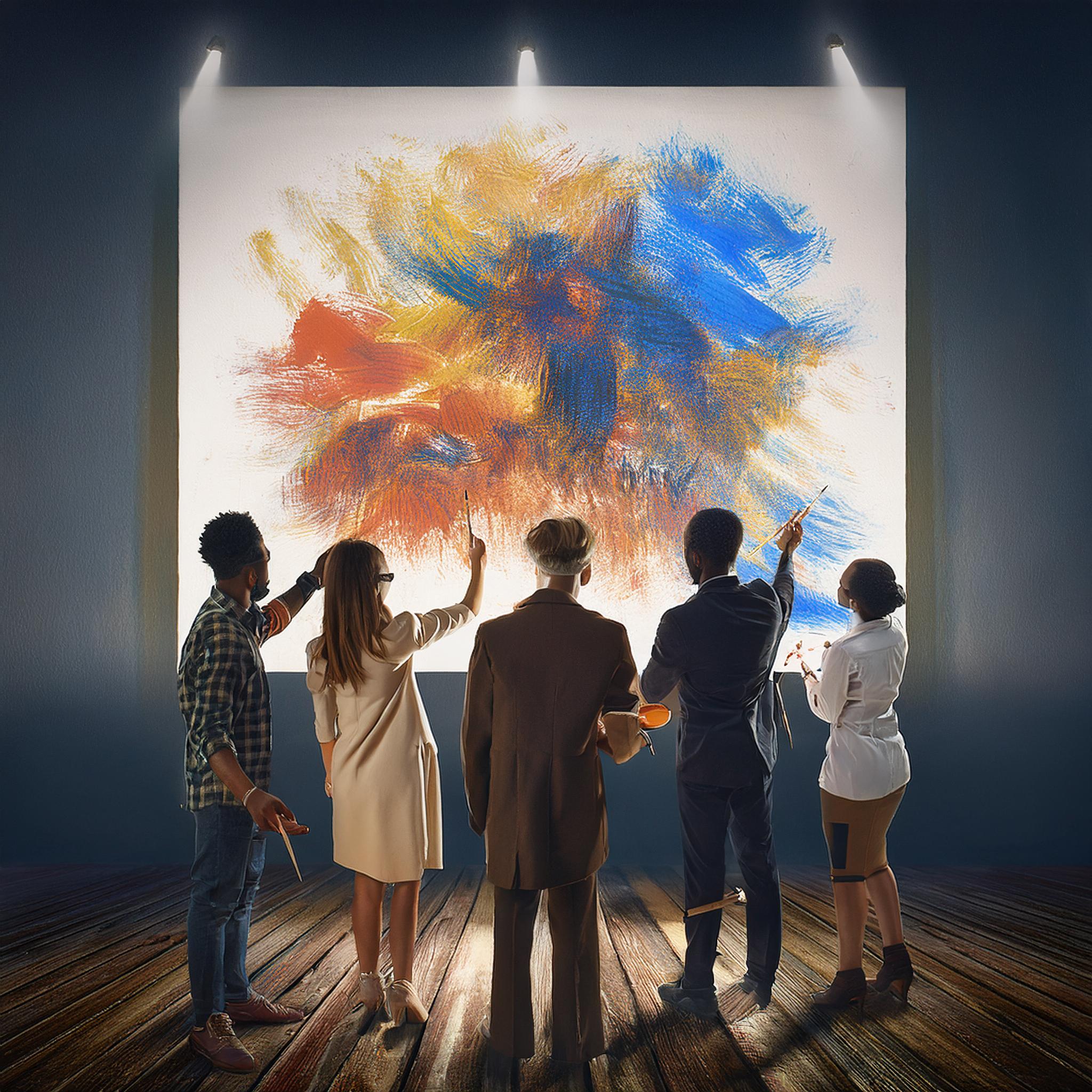
Nowadays, it is often the case that friends within a group of friends no longer live in close proximity to each other or move in different directions over time. This geographical distance means that shared rituals and activities that strengthen the friendship can no longer be carried out as usual. In the long term, this can lead to friendships fading away and the bond between friends weakening. The central question is therefore: How can friends who are separated by distance still feel connected and how can shared rituals be implemented over distance? The VREUNDE research project, which is funded by the Federal Ministry of Education and Research, is dedicated to this question. This project is investigating how smart communication objects, also known as the Internet of Things (IoT), can be used to create connectedness at a distance. An innovative idea of such an object is MagicPainting. It enables two or more friends to paint a picture together at a distance. Hand gestures are recognized, mapped to painting actions, and all participants can see and work on the same painting at the same time. The use of the MagicPainting is intended to enable groups of friends to stay in contact despite physical separation and maintain their friendship even at a distance.
Project Definition
An initial prototype is to be developed and evaluated as part of the “MagicPainting” project. Following the concept of IoT, this prototype is intended to enable low-threshold communication between friends by enabling a collaborative painting process. The painting process should be hands-free by recognizing gestures. The project can either be executed, while focusing on the holistic development of a functional IoT prototype and a subsequent evaluation within the target audience. Alternatively, the project can focus on building scalable and sophisticated software architecture and further explore different ways on how to process the generated data. Instead of a physical prototype, the MagicPainting can developed as a mobile application. In a large group of students both focus areas can be executed and combined in a larger scope.
Learning Outcomes
The learnings are based on the different approaches of the project. The following outcomes are targeted when developing and evaluating an IoT prototype:
- Development Skills in IoT Fundamentals
- Development Skills in Networking and Wireless Communication Protocols
- Development Skills in Backend-Architecture Design and Implementation
- Skills in Documentation and Structuring of Code
- Skills in Using Evaluation Techniques and Requirement Analysis
The following outcomes are targeted when developing a mobile application:
- Skills in developing mobile applications
- Skills in the development of a distributed software architecture
- Skills in the implementation of consistent, robust and high-performance APIs for distributed systems
- Skills in the application of clean code principles to implement sustainable and maintainable code
- Skills in agile development processes and test automation
Requirements
- Prior experience with Backend Development
- Willingness to delve into …
- Embedded Systems Programming
- Development of IoT Architecture (Sensor integration and data collection)
- Networking and Wireless Communication Protocols)
- Nice to have …
- Prior experience in building IoT artifacts (e.g. with ESP32 or Arduino Kits)
- Prior experience in Mobile Development (e.g. Android, iOS or Multiplatform)
Externe Projektpartner
Art+Com and IWM as cooperation partners in the VREUNDE research project (funded by BMBF).