Problem Description
As part of the project work for a former MI project at the TH Köln, MoodCube was developed in the context of the “VREUNDE” project as an approach to promote natural, subliminal and non-verbal communication in groups of friends. The aim was to create an opportunity for friends to be able to signal that you are in the mood for a certain activity without having to actively ask or request it. The feeling that the other person is being pushed into a joint activity because you don't know what they are doing can lead to a decrease in communication and joint activities. Likewise, the person receiving the message should not be torn away from a current activity. Communication only takes place when both parties actively participate.
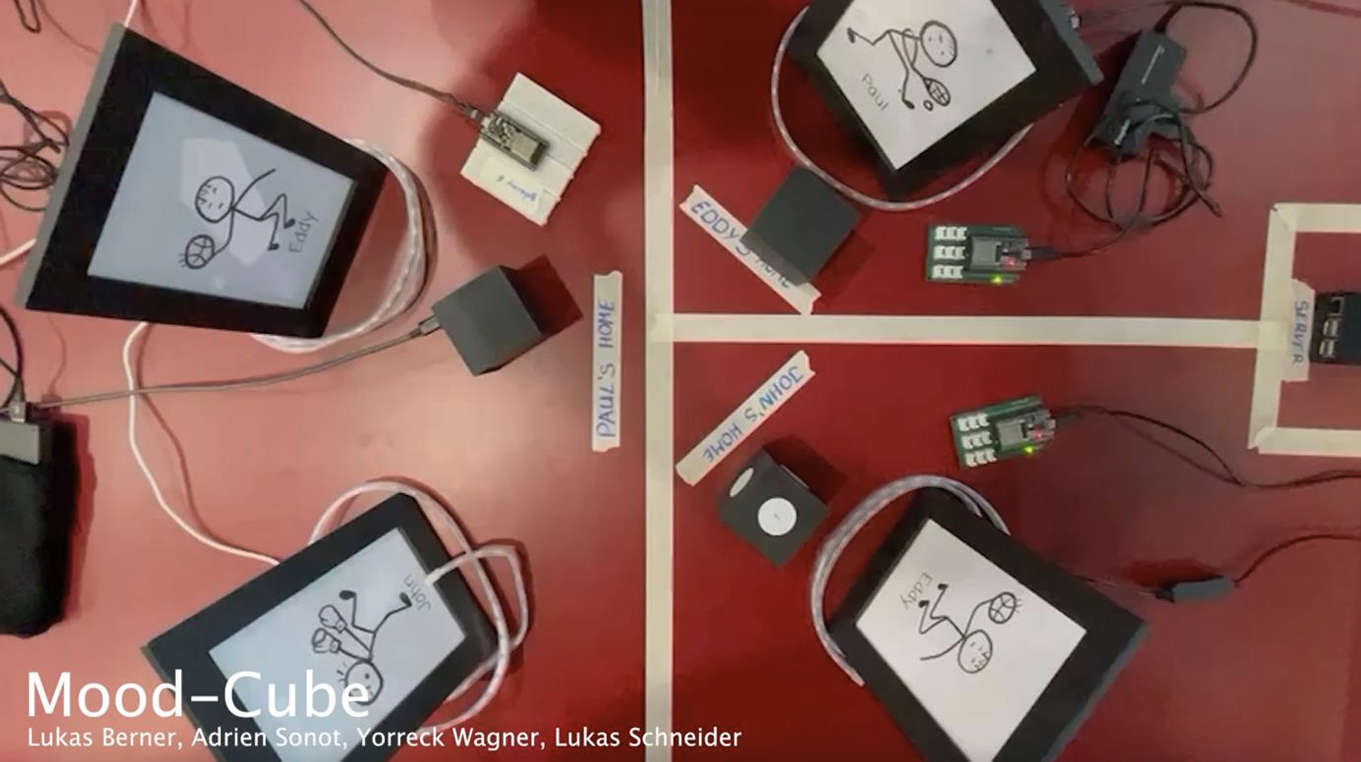
MoodCube is a system consisting of two devices, both of which are digitally extended everyday objects. These are the “Cube”, a cube that is used as an input device by turning it on its six different sides, and the “Frame”, a picture frame that uses an attachment with LED lights as an output device to represent the mood of the friend who can be seen in the picture presented in the frame.
Project Definition
Based on this prototype we would like to complete the development this semester and conduct an evaluation with real participants. To this end, the project team will finalize the prototype for the study, plan a study and work on the usability of the MoodCube.
Learning Outcomes
The Learnings are based on the different approaches of the project. The following outcomes are targeted for the Design Innovation and Products focus:
- Research on State of the art and current solutions in science
- Learn methods used for Evaluation Techniques
Developers and engineers who attain these learning outcomes will possess the skills and knowledge needed to proficiently design, develop, and implement tangible IoT objects. These objects will be characterized by their efficiency, security, and user-friendliness.
Requirements
Prior experience with..
- Development with IoT Fundamentals
- Evaluation and testing methods